

In a world where work, communication, and entertainment all happen through screens, many people are experiencing digital burnout — a state of mental and physical exhaustion caused by constant digital exposure. The endless cycle of emails, notifications, and online interactions can leave the mind overstimulated and the body drained. Understanding the causes and learning healthy coping strategies can help restore balance and well-being.
What Is Digital Burnout?
Digital burnout occurs when prolonged screen use leads to fatigue, irritability, and reduced productivity. It’s often linked to blurred boundaries between work and personal life, especially in remote or hybrid environments. Unlike traditional burnout, which stems from overwork, digital burnout is fueled by constant connectivity and information overload.
Common Causes of Digital Burnout
- Always Being “On”: The expectation to respond instantly to messages or emails creates pressure and prevents mental rest.
- Information Overload: Continuous exposure to news, social media, and digital content overwhelms the brain, making it harder to focus or retain information.
- Lack of Boundaries: Working, socializing, and relaxing all on the same device blurs the line between personal and professional time.
- Multitasking and Distraction: Switching between apps, tabs, and notifications reduces concentration and increases mental fatigue.
- Reduced Physical Movement: Long hours of sitting and staring at screens can cause eye strain, headaches, and tension in the neck and shoulders.
- Social Media Pressure: Constant comparison and the need to stay updated can heighten stress and lower self-esteem.
Signs of Digital Burnout
- Feeling mentally drained after screen use
- Difficulty concentrating or remembering information
- Increased irritability or anxiety
- Trouble sleeping due to late-night screen time
- Physical symptoms like eye strain, headaches, or fatigue
- Loss of motivation or enjoyment in online activities
Recognizing these signs early helps prevent deeper exhaustion and emotional detachment.
Coping Strategies for Digital Burnout
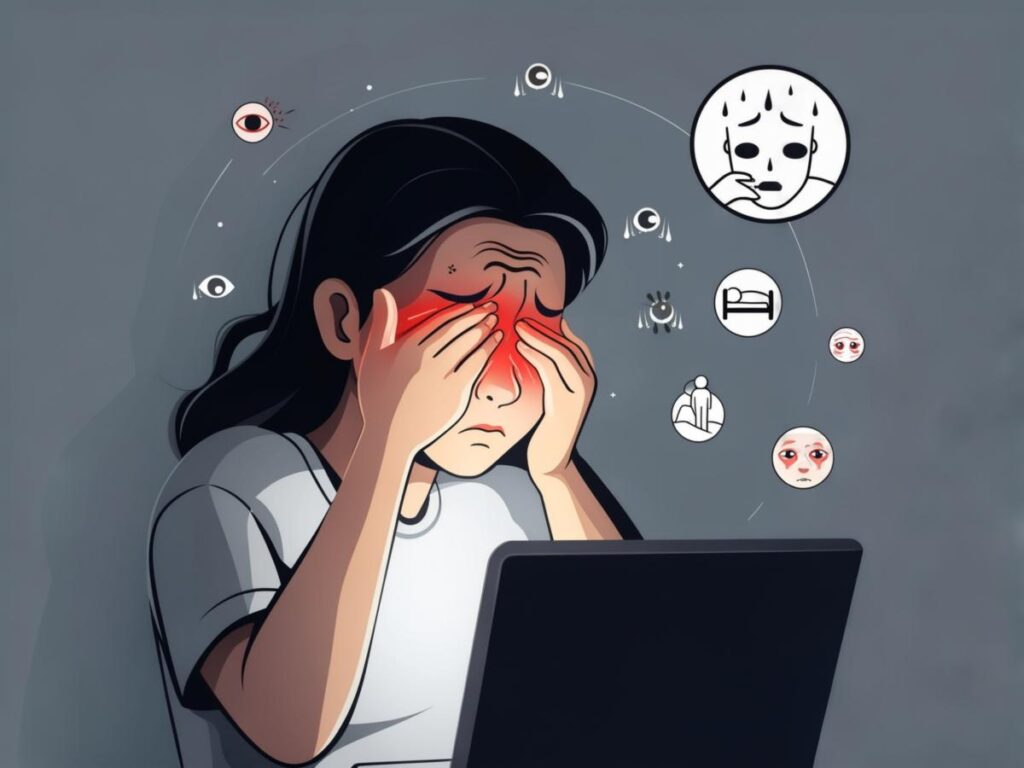
Digital burnout happens when we spend too much time on screens, causing stress, fatigue, and reduced productivity. Here are some effective strategies to cope with it:
1. Set Clear Boundaries
Establish specific times to check emails, messages, or social media instead of constantly using devices. For example, you can check emails only in the morning, after lunch, and in the evening. Avoid screens during meals and at least an hour before bedtime to improve sleep and reduce mental fatigue.
2. Take Regular Breaks
Breaks are essential for eye health and mental clarity. For instance, if you are working on a laptop or phone for a long time, step away, stretch, or walk around your room for a few minutes.
3. Create Tech-Free Zones
Keep certain areas of your home free from devices. For example, avoid bringing your phone or laptop to your bedroom or dining table. This encourages rest, mindfulness, and better family or personal interactions without digital distractions.
4. Prioritize Offline Activities
Spend time on activities that don’t involve screens. Read a physical book, draw, play a musical instrument, or engage in outdoor activities like cycling, jogging, or gardening. These hobbies help reduce stress and refresh your mind.
5. Use Technology Mindfully
Turn off unnecessary notifications and avoid multitasking on multiple apps. For instance, when working or studying, close social media tabs and focus solely on one task at a time. This reduces cognitive overload and improves productivity.
6. Practice Digital Detox Days
Dedicate one day or a few hours each week to disconnect from digital devices completely. You can use this time to go for a walk in nature, meet friends in person, or spend quality time with family. This break helps reset your mind and reduces screen dependency.
7. Protect Physical Health
Maintain good posture while using devices, stretch regularly, and use blue light filters on screens to reduce eye strain. For example, if you work long hours on a computer, use an ergonomic chair, keep your screen at eye level, and take short stretching breaks every hour.
8. Reevaluate Digital Habits
Track your screen time to identify which apps or activities cause the most stress. Replace them with more meaningful or relaxing alternatives. For example, if you spend hours scrolling on social media, try replacing it with reading, journaling, or learning a new skill online.
These strategies not only reduce digital burnout but also improve productivity, mental health, and overall well-being.
The Role of Workplaces and Schools
Organizations and educational institutions can help reduce digital burnout by promoting healthy tech habits. Encouraging regular breaks, flexible schedules, and realistic communication expectations can make a significant difference.
Creating a culture that values rest and balance helps employees and students stay engaged and mentally healthy.
The Psychological Benefits of Disconnecting

Taking time away from screens allows the brain to recharge. Offline moments foster creativity, emotional regulation, and deeper connections with others. Over time, reducing digital overload can improve mood, focus, and overall life satisfaction.
Final Thoughts
Digital burnout is a growing challenge in an always-connected world. By setting boundaries, practicing mindfulness, and prioritizing offline experiences, it’s possible to regain control over technology use and protect mental well-being.
Technology should enhance life — not exhaust it. With intentional habits and regular digital breaks, balance between connectivity and calm can be restored.