
Psychedelic-assisted therapy is an emerging field of mental health treatment that combines the use of psychedelic substances with guided psychotherapy. Substances such as psilocybin (found in certain mushrooms) and MDMA (commonly known as ecstasy) are being studied for their potential to help individuals with depression, post-traumatic stress disorder (PTSD), and anxiety. Early research suggests that, when administered in controlled and supportive settings, these compounds may promote profound emotional healing and psychological growth.
Understanding Psychedelic-Assisted Therapy
Psychedelic-assisted therapy involves the supervised use of a psychedelic substance during structured therapy sessions. The process typically includes three phases:
- Preparation: The therapist helps the participant set intentions, discuss expectations, and build trust before the session.
- Psychedelic Session: The participant takes the substance in a safe, monitored environment while guided by trained therapists. The experience may involve vivid emotions, memories, or insights.
- Integration: After the session, the therapist helps the participant process and apply insights gained during the experience to daily life.
The goal is not simply to induce altered states of consciousness but to use those experiences as catalysts for emotional release, self-understanding, and healing.
Emerging Research and Findings

Psilocybin (Magic Mushrooms)
Research from institutions such as Johns Hopkins University and Imperial College London indicates that psilocybin may help “reset” brain activity patterns associated with negative thinking and emotional rigidity. Participants often report increased feelings of connection, openness, and acceptance following treatment.
MDMA (Ecstasy)
MDMA-assisted therapy has shown promising results for individuals with PTSD. Clinical trials sponsored by the Multidisciplinary Association for Psychedelic Studies (MAPS) have demonstrated that MDMA can reduce fear and defensiveness, allowing patients to revisit traumatic memories without being overwhelmed. The substance enhances empathy and trust, which strengthens the therapeutic relationship and facilitates emotional processing.
Other Psychedelics Under Study
Researchers are also exploring the potential of LSD, ketamine, and ayahuasca for various mental health conditions. Ketamine, in particular, is already used in some clinical settings for treatment-resistant depression due to its rapid antidepressant effects.
How Psychedelics May Work in the Brain
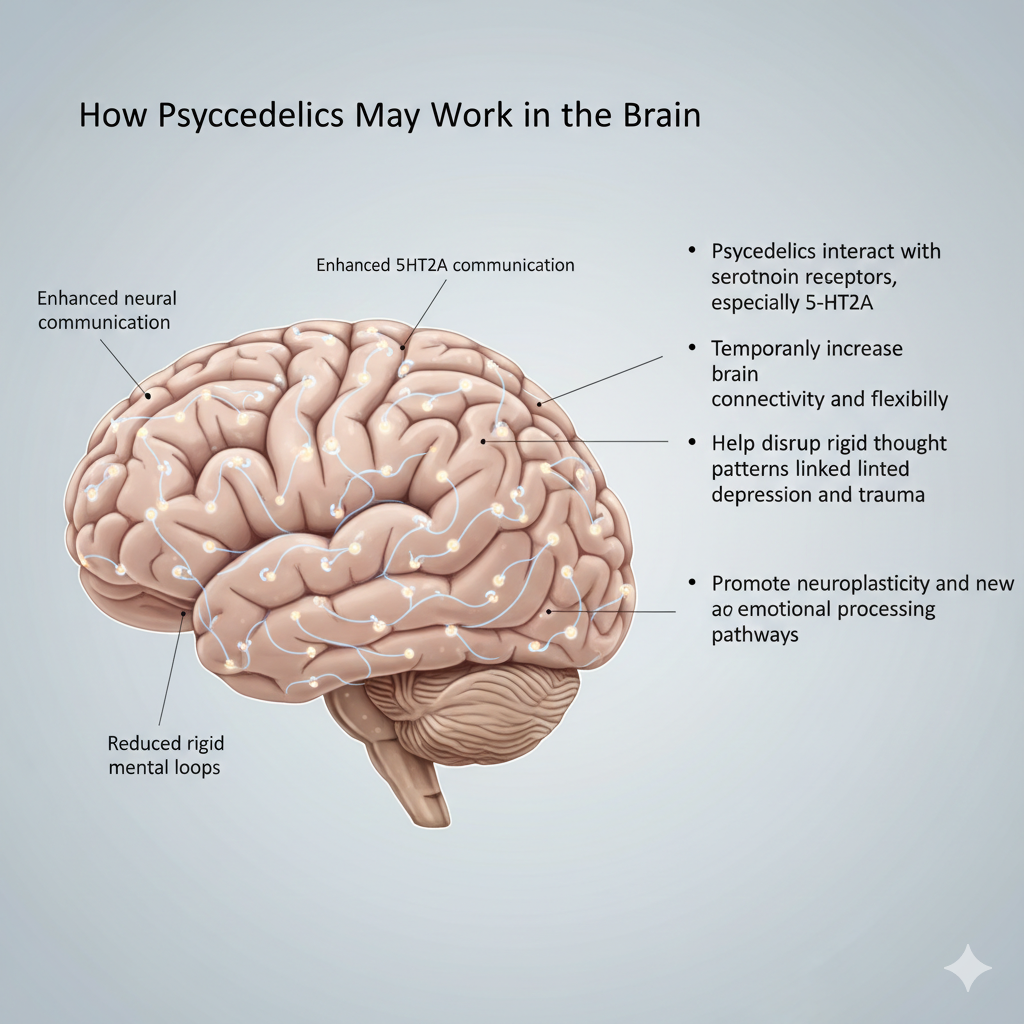
Psychedelics affect serotonin receptors, particularly the 5-HT2A receptor, which influences mood, perception, and cognition. They temporarily alter brain connectivity, allowing for new patterns of thought and emotional processing. This “neuroplastic” effect may help individuals break free from rigid mental loops associated with depression, trauma, and anxiety.
MDMA, on the other hand, increases serotonin, dopamine, and oxytocin levels, promoting feelings of safety, empathy, and emotional openness — key factors in trauma recovery.
Therapeutic Benefits
- Emotional Release: Helps individuals confront and process suppressed emotions.
- Reduced Avoidance: Encourages engagement with painful memories in a safe context.
- Enhanced Self-Compassion: Promotes acceptance and forgiveness toward oneself and others.
- Lasting Perspective Shifts: Many participants report long-term improvements in mood, relationships, and life satisfaction.
Ethical and Safety Considerations
While research is promising, psychedelic-assisted therapy must be conducted under professional supervision. Unsupervised or recreational use carries risks, including psychological distress or re-traumatization.
Ethical practice requires:
- Screening for medical and psychological suitability.
- Use of pure, regulated substances.
- Trained therapists who provide emotional and physical safety.
- Integration support after sessions to ensure lasting benefits.
Legal restrictions also vary by country, and most psychedelics remain controlled substances outside of approved research or clinical trials.
The Future of Psychedelic Therapy
As research expands, psychedelic-assisted therapy is moving closer to mainstream acceptance. Regulatory agencies in several countries are reviewing data to determine safe clinical use. MDMA-assisted therapy for PTSD and psilocybin therapy for depression are among the most advanced in the approval process.
Future developments may include specialized training for therapists, standardized treatment protocols, and broader access through licensed clinics.
Final Thoughts
Psychedelic-assisted therapy represents a new frontier in mental health care — one that blends ancient healing traditions with modern science. While still under study, these treatments offer hope for individuals who have struggled with conventional therapies.
When approached with care, professionalism, and respect for the power of these substances, psychedelic therapy has the potential to transform how mental health is understood and treated — opening pathways to deeper healing, connection, and self-awareness.