
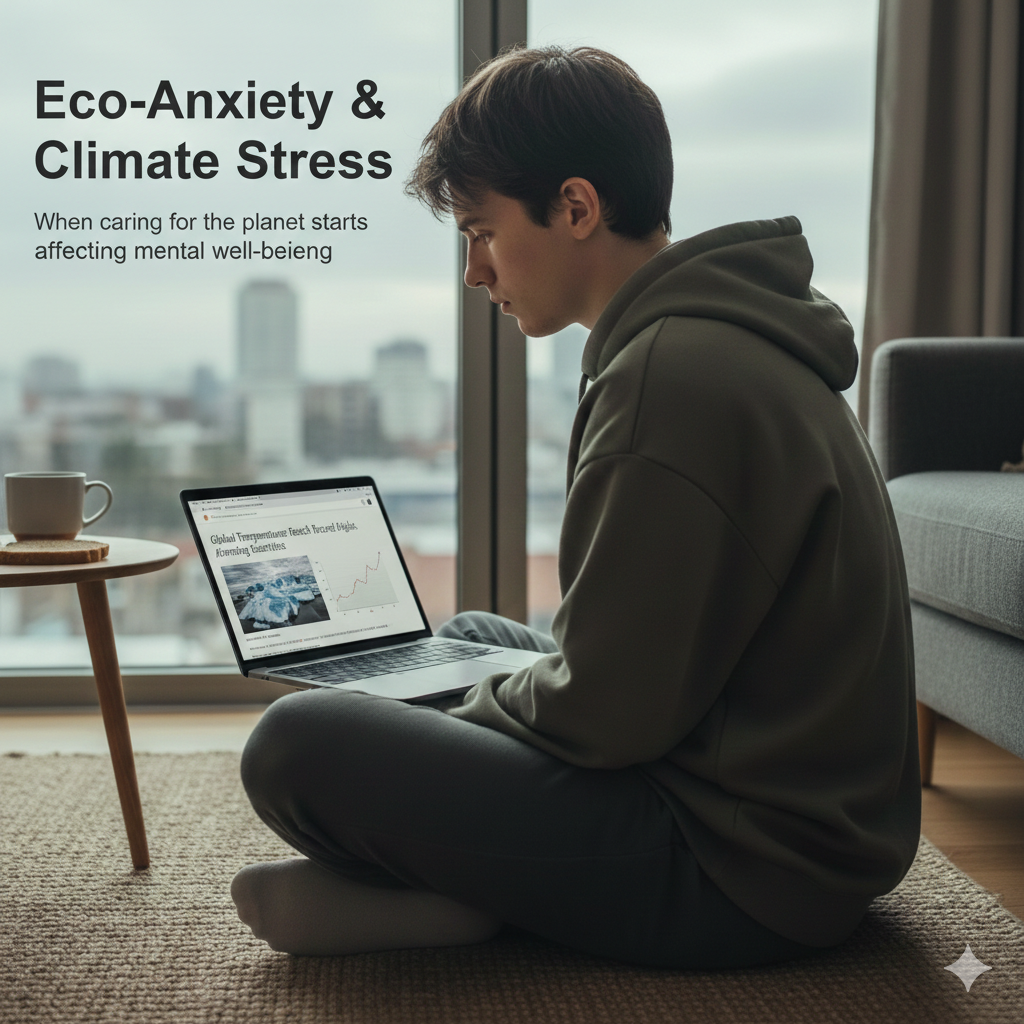
As awareness of climate change grows, so does a new form of emotional distress known as eco-anxiety — the chronic fear of environmental doom. This anxiety stems from witnessing the effects of global warming, natural disasters, and environmental degradation, as well as uncertainty about the planet’s future. While concern for the environment is natural, for many people — especially young generations — it has become a significant source of stress and emotional strain.
Understanding Eco-Anxiety
Eco-anxiety is not a clinical disorder but a natural psychological response to the real and perceived threats of climate change. It reflects empathy, awareness, and a deep sense of responsibility for the planet. However, when these feelings become overwhelming, they can lead to helplessness, sadness, or despair.
Common symptoms include:
- Persistent worry about the environment or future generations
- Feelings of guilt or hopelessness about personal impact
- Difficulty focusing due to climate-related concerns
- Emotional exhaustion or grief after exposure to environmental news
- Anger or frustration toward inaction by governments or corporations
Why Youth Are Especially Affected

Young people are among the most vocal and emotionally affected by climate change. They are growing up in a world where environmental crises are constant topics of discussion, and their futures feel uncertain.
Factors contributing to youth climate stress:
- Continuous exposure to alarming climate news and social media content
- Fear of inheriting an unstable or unlivable planet
- Pressure to take action or make sustainable choices
- Frustration with perceived inaction by older generations
- Loss of trust in institutions to protect the environment
For many, eco-anxiety is intertwined with a sense of moral responsibility — the belief that they must act to prevent further harm, even when the problem feels too large to solve alone.
The Mental Health Impact of Climate Change
Beyond eco-anxiety, climate change can directly and indirectly affect mental health. Natural disasters, displacement, and loss of livelihoods can lead to trauma, grief, and post-traumatic stress. Even those not directly affected may experience climate stress — a sense of unease or sadness about environmental decline.
Emotional effects include:
- Anxiety and panic about environmental threats
- Depression linked to feelings of powerlessness
- Grief over loss of nature or biodiversity
- Anger and activism fatigue
- Social tension or conflict over environmental issues
Coping Strategies for Eco-Anxiety
- Acknowledge and Validate Feelings
Recognizing eco-anxiety as a legitimate emotional response helps reduce shame or isolation. Talking about these feelings with friends, family, or counselors can provide relief. - Take Meaningful Action
Engaging in environmental initiatives — such as community cleanups, advocacy, or sustainable living — transforms anxiety into empowerment. Small actions can create a sense of control and purpose. - Set Healthy Media Boundaries
Constant exposure to distressing climate news can heighten anxiety. Limiting screen time and choosing balanced, solution-focused sources helps maintain perspective. - Connect with Nature
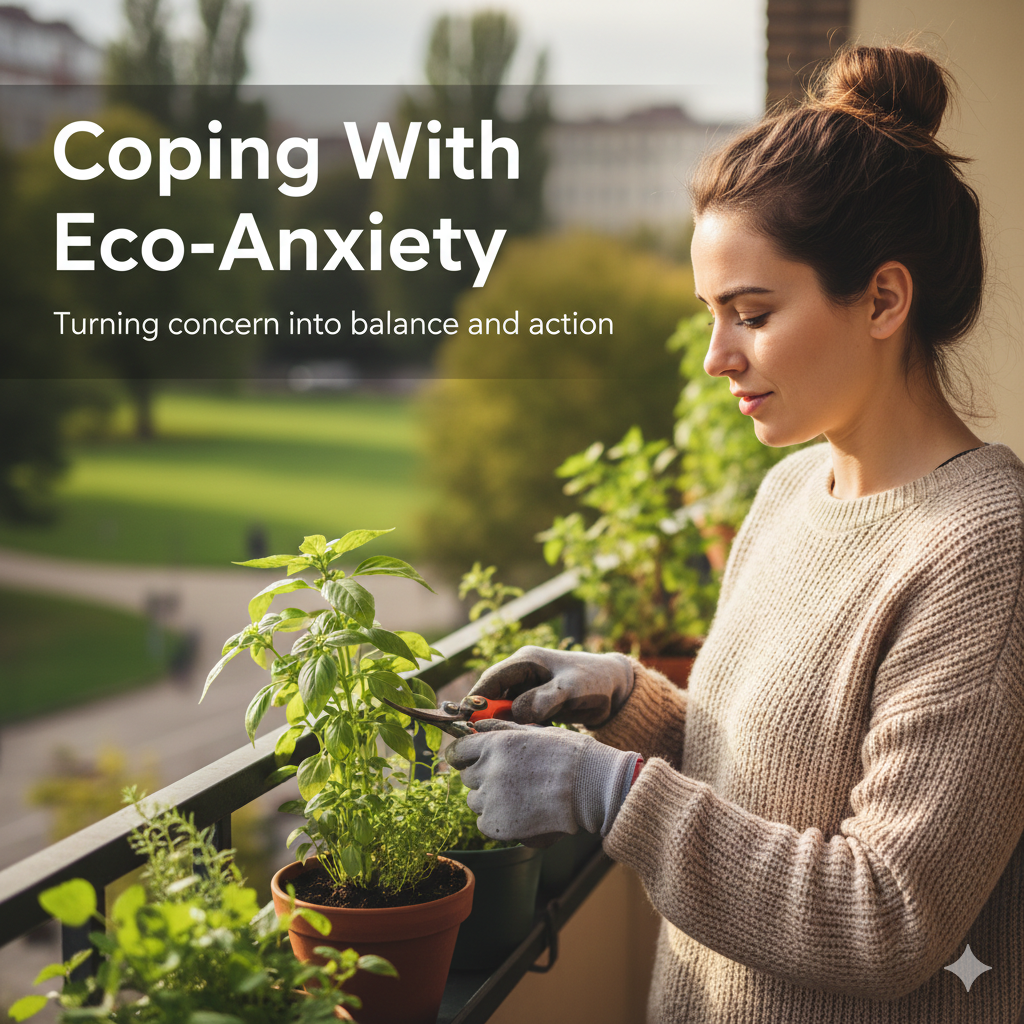
Spending time outdoors restores calm and reinforces the connection to the environment being protected. Activities like walking, gardening, or hiking can reduce stress and improve mood. - Practice Mindfulness and Self-Care
Techniques such as meditation, journaling, and deep breathing help manage emotional overwhelm. Self-care ensures that activism and awareness remain sustainable. - Build Community Support
Joining environmental groups or youth movements fosters solidarity and shared purpose. Collective action reduces feelings of isolation and amplifies hope.
The Role of Education and Institutions
Schools, universities, and organizations can play a key role in addressing eco-anxiety by:
- Incorporating climate education that emphasizes solutions and resilience.
- Providing mental health resources for students affected by climate stress.
- Encouraging open discussions about environmental emotions and activism.
- Supporting youth-led sustainability projects that promote empowerment.
When young people feel heard and supported, their concern for the planet can become a source of motivation rather than despair.
Finding Hope in Action
Hope is not the absence of fear but the belief that change is possible. Many individuals and communities are already making progress through innovation, conservation, and advocacy. Recognizing these efforts helps shift focus from helplessness to possibility.
Final Thoughts
Eco-anxiety reflects care, awareness, and a desire for a better future — qualities that can drive meaningful change. By acknowledging these emotions, fostering community, and focusing on action, it becomes possible to transform climate stress into resilience and hope.
Supporting mental health in the face of climate change ensures that concern for the planet remains a source of strength — empowering individuals, especially youth, to protect both the Earth and their own well-being.