Physical and mental fitness are deeply interconnected. Regular exercise and cognitive training not only strengthen the body but also enhance brain function, emotional balance, and overall mental well-being. Scientific research consistently shows that movement and mental stimulation can improve mood, memory, focus, and resilience — forming a foundation for long-term cognitive health.
The Mind-Body Connection
The brain and body work in constant partnership. Physical activity increases blood flow, oxygen, and nutrient delivery to the brain, supporting neural growth and repair. At the same time, mental fitness exercises stimulate cognitive pathways, improving flexibility and problem-solving. Together, they create a powerful synergy that enhances both physical vitality and mental clarity.
Mental Benefits of Physical Exercise
- Improved Mood and Reduced Stress
Exercise triggers the release of endorphins, serotonin, and dopamine — neurotransmitters that elevate mood and reduce anxiety. Even short bouts of movement can lower cortisol levels and promote relaxation.
- Enhanced Cognitive Function
Regular aerobic activity supports neurogenesis (the growth of new brain cells) and strengthens connections in the hippocampus, the region responsible for learning and memory.
- Better Focus and Productivity
Physical activity increases alertness and concentration by improving blood circulation and oxygenation in the brain. Studies show that moderate exercise before work or study sessions enhances attention and creativity.
- Protection Against Cognitive Decline
Consistent exercise reduces the risk of age-related cognitive decline and neurodegenerative diseases such as Alzheimer’s. It helps maintain brain volume and supports long-term mental agility.
- Improved Sleep and Emotional Regulation
Exercise promotes deeper, more restorative sleep, which is essential for emotional balance and cognitive recovery.
Cognitive Training and Mental Fitness
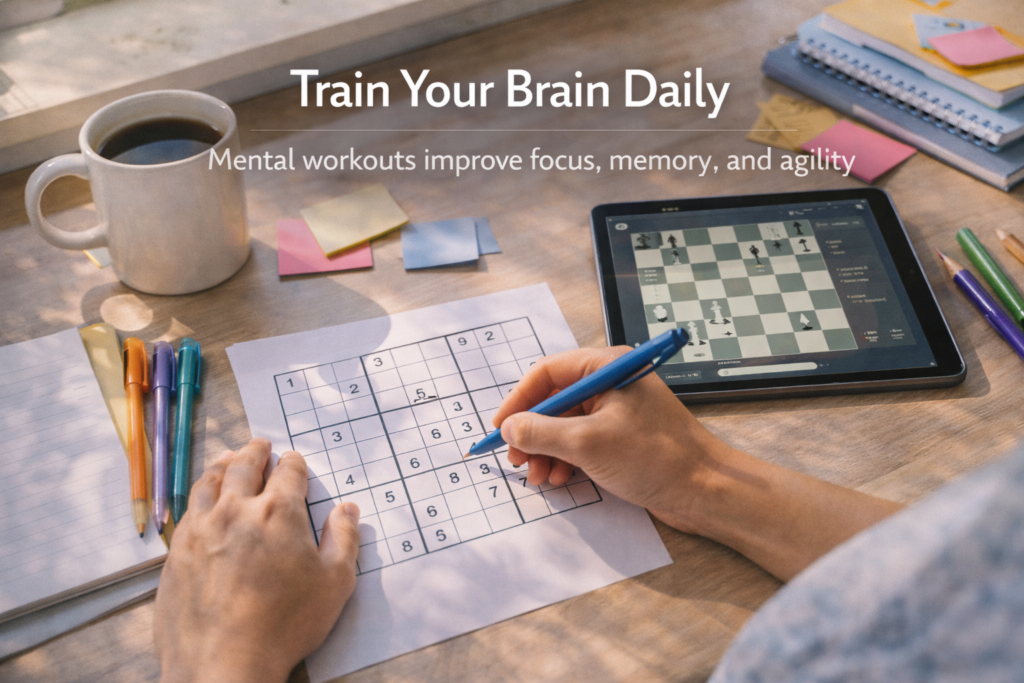
Cognitive training involves structured activities that challenge the brain to improve memory, reasoning, and attention. Just as muscles strengthen through physical exercise, the brain benefits from regular mental workouts.
Examples of cognitive training activities:
- Memory games and puzzles
- Learning new skills or languages
- Strategy-based games like chess or Sudoku
- Creative pursuits such as writing, painting, or music
- Mindfulness and meditation practices that enhance focus and awareness
These activities stimulate neuroplasticity — the brain’s ability to reorganize and form new connections — which supports lifelong learning and adaptability.
The Role of Mindfulness and Mental Fitness Practices

Mindfulness, meditation, and breathing exercises are key components of mental fitness. They train the mind to stay present, reduce rumination, and improve emotional regulation. Regular mindfulness practice has been shown to:
- Lower stress and anxiety levels
- Increase gray matter density in brain regions linked to memory and empathy
- Enhance decision-making and self-awareness
Combining mindfulness with physical activity, such as yoga or tai chi, further strengthens the connection between body and mind.
Integrating Fitness and Cognitive Health into Daily Life
- Move Regularly
Aim for at least 30 minutes of moderate exercise most days — walking, cycling, dancing, or swimming all count.
- Challenge the Brain
Engage in mentally stimulating activities daily. Try learning something new or solving puzzles to keep the mind sharp.
- Combine Physical and Mental Training
Activities like martial arts, dance, or team sports require coordination, focus, and strategy — offering both physical and cognitive benefits.
- Prioritize Rest and Recovery
Adequate sleep and relaxation are essential for consolidating learning and maintaining emotional balance.
- Stay Socially Active
Social interaction stimulates cognitive function and emotional well-being. Group exercise or shared hobbies combine physical, mental, and social engagement.
The Science of Neuroplasticity and Exercise
Exercise enhances neuroplasticity by increasing levels of brain-derived neurotrophic factor (BDNF), a protein that supports neuron growth and communication. This process improves learning, memory, and adaptability — key components of cognitive resilience.
Cognitive training complements this by reinforcing neural pathways, ensuring that the brain remains flexible and responsive throughout life.
Final Thoughts
Fitness and cognitive mental health are inseparable pillars of overall well-being. Physical exercise energizes the body and sharpens the mind, while cognitive training and mindfulness strengthen focus, creativity, and emotional stability.
By integrating movement, mental challenges, and mindful practices into daily routines, it becomes possible to build a resilient, agile mind — one that thrives under pressure, adapts to change, and continues to grow throughout life.