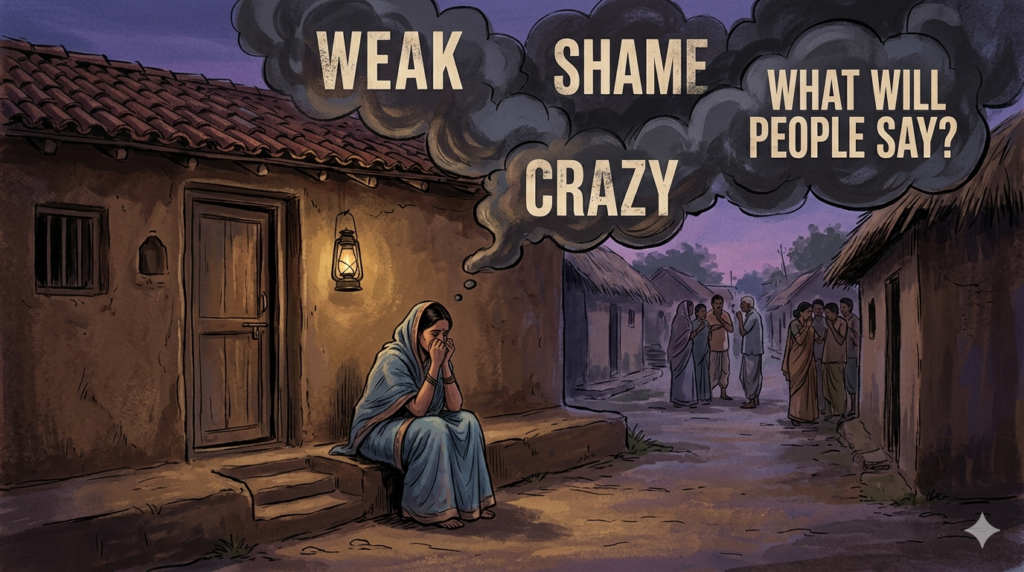
When someone in a village feels sad for weeks or can’t sleep at night because of worry, they often stay quiet. They don’t tell their family. They don’t visit a doctor. They suffer alone. Why? Because they’re afraid of what people will say.
This is what we call “mental health stigma”—the shame and fear that stops people from talking about their feelings or getting help for problems like depression, anxiety, or stress.
In rural areas and poor communities, this problem is much bigger. Let’s understand why this happens and what we can do about it.
What Is Mental Health Stigma?
Stigma means negative beliefs or judgments about something. Mental health stigma happens when people think:
- “Only crazy people have mental problems”
- “If you’re depressed, you’re just weak”
- “Real men don’t cry or feel anxious”
- “Mental illness brings shame to the family”
These wrong ideas make people hide their problems instead of getting help.
Why Is Stigma Worse in Rural and Poor Areas?
1. Lack of Knowledge
Many people in villages have never learned about mental health. They don’t know that:
- Depression is a real medical condition, not just “feeling sad”
- Anxiety disorders need treatment, just like fever or diabetes
- Mental health problems can happen to anyone
- Treatment works and people can get better
Without this basic knowledge, people believe old myths and superstitions.
2. Everyone Knows Everyone
In small communities, privacy is difficult. If you visit a doctor for mental health, the whole village might find out by evening. People fear:
- Neighbors will gossip about them
- They’ll be called “pagal” (crazy)
- Their children won’t get marriage proposals
- They’ll lose respect in the community
This fear of judgment keeps people silent.
3. Money Problems
Poor families struggle to afford basic needs like food and shelter. Mental health treatment feels like an extra expense they cannot manage.
Common money problems:
- Doctor visits cost money
- Medicines are expensive
- Traveling to the city for treatment is costly
- Taking time off work means losing daily wages
When you’re worried about feeding your family today, mental health seems less important.
4. No Doctors or Clinics Nearby
Most villages don’t have mental health professionals. The nearest psychiatrist or counselor might be 50 or 100 kilometers away. This makes getting help very difficult.
5. Cultural Beliefs
In many communities, people believe mental health problems are caused by:
- Evil spirits or black magic
- Punishment from God
- Past life sins
- Weak character or lack of willpower
These beliefs make people visit faith healers instead of doctors, which doesn’t solve the real problem.
How Stigma Hurts People
People Don’t Get Help
Because of shame and fear, people wait years before seeking treatment. By then, their condition becomes much worse. What could have been treated easily becomes a serious problem.
Using Alcohol or Drugs
Without proper help, many people drink alcohol or use other substances to feel better temporarily. This creates new problems and makes mental health worse.
Suicide Risk
When people feel hopeless and have no one to talk to, some think about ending their life. Rural areas have higher suicide rates, partly because mental health support is so limited.
Families Suffer Too
When one person in a family has untreated mental health problems, everyone suffers. Children learn to hide their feelings. Relationships break down. The whole family lives under stress.
How to Break the Stigma: Simple Steps
For Communities
1. Talk About It
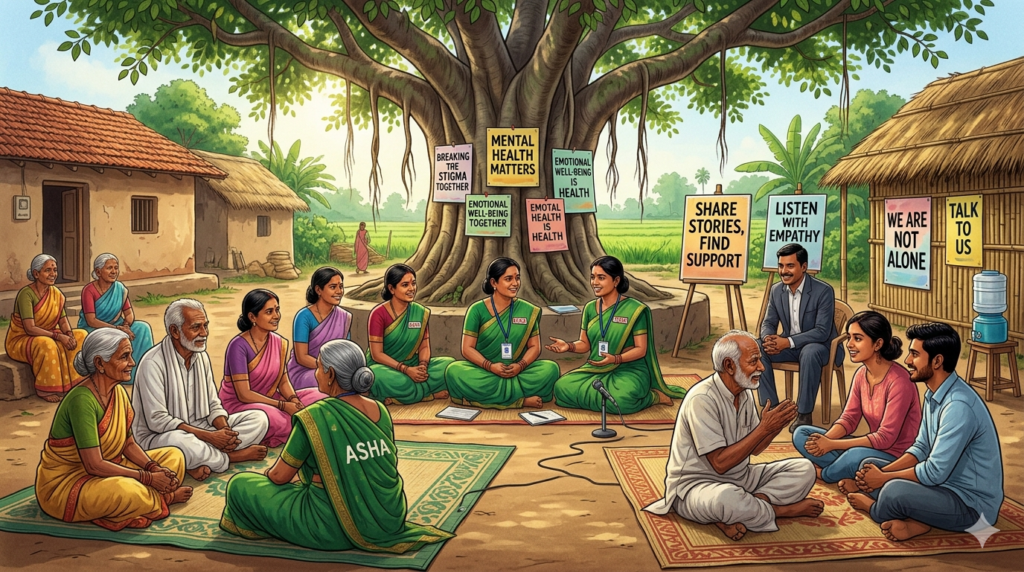
Start simple conversations about mental health in schools, community meetings, and religious gatherings. When leaders and respected people talk openly, others feel safer to discuss their problems.
2. Share Real Stories
When someone recovers from depression or anxiety and shares their story, it gives others hope. It shows that mental health problems are common and treatable.
3. Train Local Health Workers
The ASHA workers, ANM nurses, and local doctors can learn to recognize mental health problems and provide basic support or referrals.
4. Use Simple Language
Instead of medical terms, use words people understand. Talk about “feeling very sad for a long time” instead of “depression.” This makes the topic less scary.
For Individuals and Families
If You’re Struggling:
- Know that what you’re feeling is real and not your fault
- Talk to one person you trust—a friend, family member, or teacher
- Call a helpline if you’re not ready to talk face-to-face
- Try online counseling for privacy
- Remember: asking for help is brave, not weak
If Someone You Know Is Struggling:
- Listen without judging them
- Don’t say things like “just be positive” or “others have bigger problems”
- Help them find a doctor or counselor
- Offer to go with them for support
- Keep their information private
Good News: Help Is Available
Free and Low-Cost Options
Tele-MANAS (India): Call 14416 or 1800-891-4416 for free mental health support in your language.
Government Hospitals: District hospitals have psychiatry departments with low fees.
Online Counseling: Many websites and apps offer affordable therapy sessions from home.
NGOs: Several organizations provide free mental health services in rural areas.
Online Help Gives Privacy
Video calls or phone counseling means:
- No one in your village needs to know
- You can talk from home
- It costs less than traveling to the city
- You can choose a time that works for you
Real Change Is Happening
Some villages and districts are already making progress. When communities start mental health awareness programs, more people seek help. When local health workers are trained, people get support faster.
In some areas, support groups meet regularly where people share their experiences. This helps everyone feel less alone.
Remember These Important Points
✓ Mental health is just like physical health. Just as you’d see a doctor for stomach pain, you should get help for constant sadness or worry.
✓ Mental health problems are common. One in seven Indians experiences mental health issues. You’re not alone.
✓ Treatment works. With proper care, most people feel much better and live happy, productive lives.
✓ Asking for help is strong, not weak. It takes courage to admit you’re struggling and seek support.
✓ You deserve to feel better. Your mental health matters, regardless of your income or where you live.
Final Thoughts
Mental health stigma in rural and poor communities is a serious problem, but it’s not permanent. Every time someone speaks up, every time a family seeks help, every time a community has an honest conversation—the stigma gets a little weaker.
Change starts with understanding. Now that you know about mental health stigma, you can be part of the solution. Whether you share this information with others, support someone who’s struggling, or seek help for yourself, you’re helping break the silence.
Mental health is health. Everyone deserves care, respect, and support—no matter where they live or how much money they have.
If you or someone you know needs help, please reach out. There are people ready to listen and support you.