
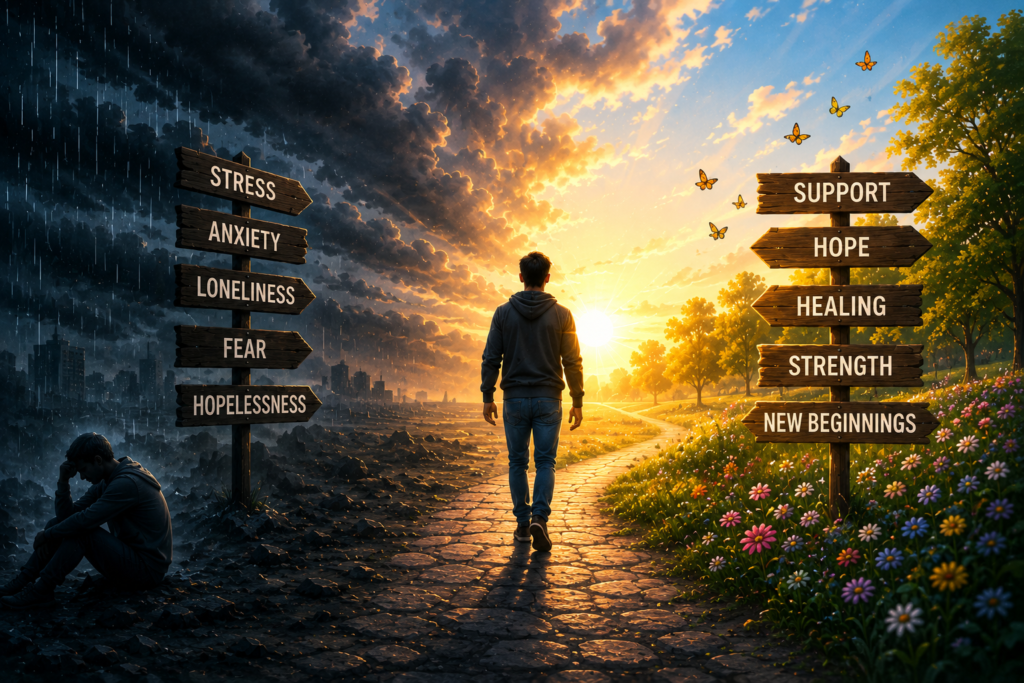
We all face difficult times. Sometimes, life feels overwhelming, and the weight of our struggles becomes too heavy to carry alone. If you’re going through a tough period—whether it’s anxiety, depression, stress, or just feeling lost—know this: seeking help is not a sign of weakness. It’s a sign of courage.
You Don’t Have to Face It Alone
Many people believe they should handle everything on their own. But the truth is, we all need support sometimes. Just as you’d see a doctor for a physical injury, it’s equally important to seek help for emotional and mental struggles. You deserve care, compassion, and healing.
Why People Hesitate to Seek Help
- Fear of judgment: Worrying about what others might think.
- Feeling like a burden: Believing your problems aren’t “serious enough.”
- Shame or stigma: Thinking that needing help means you’re weak.
- Not knowing where to start: Feeling lost about how to find support.
- If any of these resonate with you, remember: these feelings are common, but they don’t reflect the truth. Your mental health matters, and reaching out is the bravest thing you can do.
Signs It’s Time to Seek Help
You don’t need to wait until things become unbearable. Consider reaching out if you’re experiencing:
- Persistent sadness or hopelessness that won’t go away
- Overwhelming anxiety or worry that interferes with daily life
- Changes in sleep or appetite that feel out of your control
- Loss of interest in things you once enjoyed
- Difficulty concentrating or making decisions
- Thoughts of self-harm or suicide
- Feeling isolated or disconnected from others
- Using substances to cope with emotions
If you recognize any of these signs, please know that help is available—and it works.
What Seeking Help Looks Like

Seeking help doesn’t have to be overwhelming. It can start small:
Talk to someone you trust: A friend, family member, teacher, or mentor can offer support and encouragement.
Reach out to a professional: Therapists, counselors, and psychiatrists are trained to help. They provide a safe, non-judgmental space to talk.
Call a helpline: Crisis lines and mental health hotlines are available 24/7 for immediate support.
Visit your doctor: Your family doctor can assess your mental health and refer you to specialists.
Join a support group: Connecting with others who understand what you’re going through can be incredibly healing.
Use online resources: Many organizations offer online counseling, chat support, and mental health tools.
What to Expect When You Seek Help
You’ll be heard: Mental health professionals listen without judgment. Your feelings are valid, and they’re there to support you.
You’ll get a plan: Together, you’ll explore treatment options—therapy, medication, lifestyle changes, or a combination.
It takes time: Healing is a journey, not a quick fix. Be patient with yourself.
You’re in control: You decide what feels right for you. A good therapist will work with you, not dictate to you.
Remember: Asking for Help Is Strength
It takes courage to admit you’re struggling. It takes strength to reach out. And it takes bravery to choose healing over suffering in silence.
You are not alone. Millions of people seek help every day, and their lives improve because of it. You deserve that same chance at peace, happiness, and well-being.
Take the First Step Today
If you’re reading this and feeling hesitant, start small:
- Text a friend and say, “I’m going through a tough time.”
- Search for a therapist or counselor in your area.
- Call a mental health helpline and talk to someone who cares.
- Write down how you’re feeling—it’s a step toward understanding yourself.
You don’t have to have all the answers. You just have to take the first step.
Final Thoughts
Your mental health is just as important as your physical health. Seeking help isn’t giving up—it’s choosing to fight for yourself. It’s choosing hope over despair, connection over isolation, and healing over pain.
You matter. Your feelings matter. And you deserve support.
If you’re in crisis, please reach out immediately:
- Contact a local mental health helpline
- Visit your nearest emergency room
- Call emergency services
You are not alone. Help is here. And it starts with one brave step.