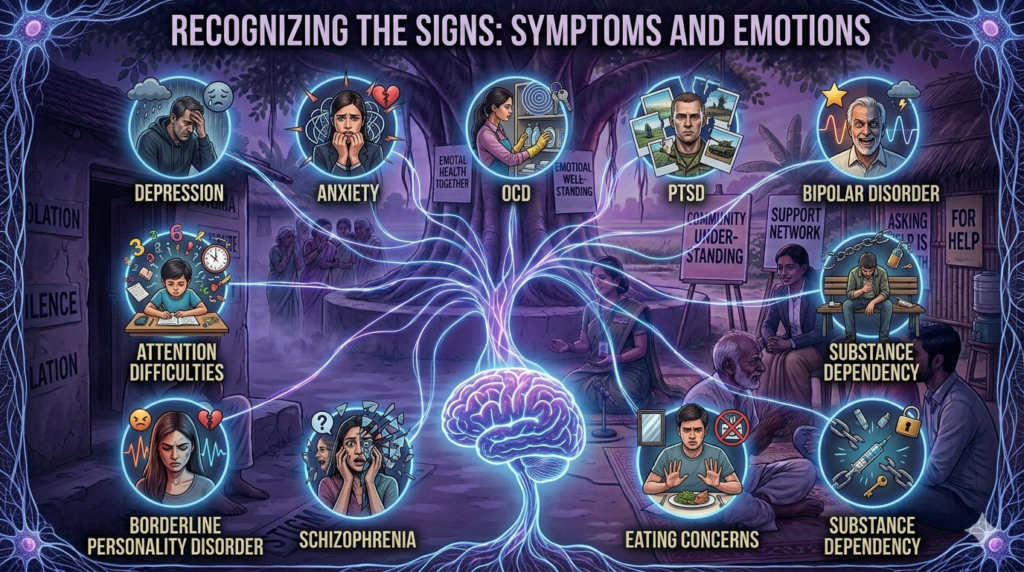
Understanding common mental health conditions and how to recognize when help is needed
Introduction
Mental health is just as important as physical health. Approximately 1 in 4 people worldwide will experience a mental health disorder at some point in their lives. Understanding these conditions helps us recognize symptoms, reduce stigma, and seek help when needed.
Let’s explore the 10 most common mental health disorders, their symptoms, causes, and how to find support.
1. Depression (Major Depressive Disorder)
What It Is:
Persistent sadness, emptiness, or hopelessness that interferes with daily life.
Common Symptoms:
- Persistent sad or “empty” mood
- Loss of interest in activities once enjoyed
- Fatigue and low energy
- Difficulty concentrating
- Changes in appetite or sleep
- Feelings of worthlessness
- Thoughts of death or suicide
Causes:
Brain chemistry imbalances, genetics, trauma, stressful life events, chronic illness.
Treatment:
- Therapy: Cognitive Behavioral Therapy (CBT)
- Medication: Antidepressants (SSRIs, SNRIs)
- Lifestyle: Exercise, sleep routine, social connection
Seek help if symptoms last more than two weeks or you have thoughts of self-harm.
2. Anxiety Disorders
What It Is:
Excessive worry or fear that’s difficult to control and interferes with daily activities.
Types:
- Generalized Anxiety Disorder (GAD)
- Panic Disorder
- Social Anxiety Disorder
- Specific Phobias
Common Symptoms:
- Excessive worry or fear
- Restlessness
- Rapid heartbeat, sweating, trembling
- Difficulty concentrating
- Sleep problems
- Avoiding triggering situations
Causes:
Genetics, brain chemistry imbalances, stressful experiences, personality traits.
Treatment:
- Therapy: CBT, Exposure Therapy
- Medication: Anti-anxiety medications, SSRIs
- Techniques: Deep breathing, mindfulness
- Lifestyle: Limit caffeine, exercise, adequate sleep
3. Obsessive-Compulsive Disorder (OCD)
What It Is:
Unwanted, intrusive thoughts (obsessions) and repetitive behaviors (compulsions) performed to reduce anxiety.
Common Symptoms:
- Obsessions: Fear of contamination, need for symmetry, intrusive thoughts, excessive doubt
- Compulsions: Excessive cleaning, checking, counting, ordering, mental rituals
Causes:
Brain structure differences, genetics, environmental factors.
Treatment:
- Therapy: Exposure and Response Prevention (ERP)
- Medication: SSRIs at higher doses
- Support: OCD support groups
Note: OCD is not about being neat—it’s a serious condition causing significant distress.
4. Post-Traumatic Stress Disorder (PTSD)
What It Is:
Develops after experiencing or witnessing a traumatic event.
Common Symptoms:
- Flashbacks and nightmares
- Avoiding reminders of trauma
- Negative thoughts and emotional numbness
- Being easily startled, feeling tense
- Difficulty sleeping, irritability
Causes:
Combat, assault, serious accidents, natural disasters, childhood abuse.
Treatment:
- Therapy: Trauma-focused CBT, EMDR
- Medication: Antidepressants
- Support: Trauma support groups
5. Bipolar Disorder
What It Is:
Extreme mood swings between emotional highs (mania) and lows (depression).
Common Symptoms:
Manic Episodes:
- Elevated mood or irritability
- Increased energy, decreased need for sleep
- Racing thoughts, rapid speech
- Impulsive or risky behavior
Depressive Episodes:
- Low energy, sadness, hopelessness
- Loss of interest in activities
Causes:
Genetics, brain structure, environmental triggers.
Treatment:
- Medication: Mood stabilizers, antipsychotics
- Therapy: CBT, family therapy
- Lifestyle: Regular sleep schedule, stress management
6. Schizophrenia
What It Is:
A serious disorder affecting how a person thinks, feels, and behaves, involving losing touch with reality.
Common Symptoms:
- Hallucinations (seeing/hearing things that aren’t there)
- Delusions (false beliefs)
- Disorganized thinking
- Reduced emotional expression
- Social withdrawal
Causes:
Genetics, brain chemistry differences, environmental factors.
Treatment:
- Medication: Antipsychotics (essential)
- Therapy: CBT, social skills training
- Support: Case management, vocational rehabilitation
Important: People with schizophrenia are not violent. With treatment, many live fulfilling lives.
7. Eating Disorders
Types:
Anorexia Nervosa:
- Extreme food restriction
- Intense fear of gaining weight
- Distorted body image
Bulimia Nervosa:
- Binge eating followed by purging
- Feeling out of control
Binge Eating Disorder:
- Recurrent episodes of eating large amounts
- Eating when not hungry, eating alone due to shame
Causes:
Genetics, psychological factors, cultural pressure, trauma.
Treatment:
- Medical care for physical complications
- Therapy: CBT, nutritional counseling
- Medication: Antidepressants
- Support: Eating disorder support groups
Warning: Eating disorders have the highest mortality rate of any mental illness. Early intervention is crucial.
8. Attention-Deficit/Hyperactivity Disorder (ADHD)
What It Is:
A neurodevelopmental disorder affecting attention, impulse control, and activity levels.
Common Symptoms:
Inattention:
- Difficulty focusing
- Easily distracted
- Forgetfulness
- Difficulty organizing
Hyperactivity/Impulsivity:
- Fidgeting, restlessness
- Difficulty sitting still
- Talking excessively
- Acting without thinking
Causes:
Genetics, brain structure differences, prenatal factors.
Treatment:
- Medication: Stimulants or non-stimulants
- Therapy: Behavioral therapy, coaching
- Accommodations: School/work adjustments
- Lifestyle: Exercise, structured routines
9. Borderline Personality Disorder (BPD)
What It Is:
Unstable moods, behavior, and relationships, with intense fear of abandonment.
Common Symptoms:
- Intense, unstable relationships
- Fear of abandonment
- Unstable self-image
- Impulsive, risky behaviors
- Suicidal behavior or self-harm
- Intense mood swings
- Chronic feelings of emptiness
Causes:
Genetics, brain differences, childhood trauma or abuse.
Treatment:
- Therapy: Dialectical Behavior Therapy (DBT)
- Medication: For co-occurring symptoms
- Skills training: Emotion regulation, distress tolerance
Important: BPD is highly treatable with proper therapy.
10. Substance Use Disorders (Addiction)
What It Is:
Compulsive substance use despite harmful consequences.
Common Symptoms:
- Using more than intended
- Unsuccessful attempts to cut down
- Cravings
- Neglecting responsibilities
- Continued use despite problems
- Tolerance and withdrawal symptoms
Causes:
Genetics (40-60% of risk), environmental factors, mental health conditions, early use.
Treatment:
- Detoxification: Medically supervised withdrawal
- Therapy: CBT, group therapy
- Medication: For specific dependencies
- Support: 12-step programs, SMART Recovery
- Rehabilitation: Inpatient or outpatient programs
Important: Addiction is a disease, not a moral failing. Recovery is possible.
Warning Signs to Watch For
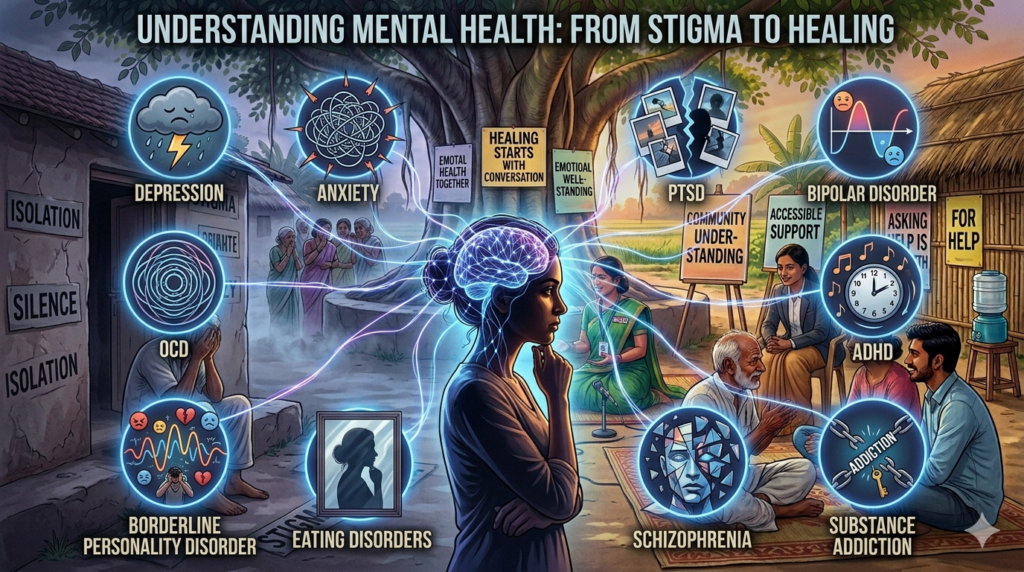
Seek professional help if you or someone you know experiences:
- Persistent sadness, anxiety, or emptiness
- Withdrawal from friends and activities
- Significant changes in eating or sleeping
- Extreme mood swings
- Difficulty functioning
- Increased substance use
- Thoughts of death or suicide
How to Support Someone
DO:
✓ Listen without judgment
✓ Educate yourself about their condition
✓ Encourage professional help
✓ Be patient
✓ Offer practical support
DON’T:
✗ Tell them to “snap out of it”
✗ Blame them for their condition
✗ Try to “fix” them yourself
✗ Take their symptoms personally
Finding Help
Professional Resources:
- Psychiatrists (diagnose and prescribe medication)
- Psychologists (provide therapy)
- Counselors/Therapists (talk therapy)
- Social Workers (therapy and resources)
In India:
- NIMHANS Helpline: 080-46110007
- Vandrevala Foundation: 1860-2662-345
- iCall: 9152987821
Emergency:
If you or someone is in crisis:
- Call emergency services immediately
- Go to the nearest emergency room
- Contact a crisis helpline
Final Thoughts
Mental health disorders are common, real, and treatable. Understanding them helps us recognize when help is needed. No one should suffer in silence.
Remember:
- Mental illness is not weakness
- Seeking help is strength
- Recovery is possible
- You are not alone
- Treatment works
Your mental health matters. Help is available. Recovery is possible.