
Exploring how OCD and anxiety overlap and what it means for your mental health

Introduction
If you have OCD, you’ve likely experienced intense anxiety. If you have anxiety, you might wonder if some of your symptoms could be OCD. These two conditions are closely connected, yet they’re not the same thing. Understanding how they overlap—and how they differ—is crucial for getting the right help and finding relief.
Let’s explore the relationship between OCD and anxiety, how they affect each other, and what you can do to manage both effectively.
What is Anxiety?
Anxiety is your body’s natural response to stress or perceived danger. It’s the feeling of worry, nervousness, or unease about something with an uncertain outcome.
Normal Anxiety vs. Anxiety Disorder
Normal Anxiety:
- Temporary and related to specific situations
- Proportionate to the actual threat
- Doesn’t significantly interfere with daily life
- Goes away when the stressor is resolved
Anxiety Disorder:
- Persistent and excessive worry
- Out of proportion to actual danger
- Interferes with work, relationships, and daily activities
- Doesn’t go away easily, even when there’s no real threat
Common Anxiety Disorders:
- Generalized Anxiety Disorder (GAD)
- Social Anxiety Disorder
- Panic Disorder
- Specific Phobias
- Separation Anxiety Disorder
What is OCD?
Obsessive-Compulsive Disorder (OCD) is a mental health condition characterized by:
Obsessions: Unwanted, intrusive thoughts, images, or urges that cause intense anxiety or distress.
Compulsions: Repetitive behaviors or mental acts performed to reduce the anxiety caused by obsessions.
The OCD Cycle:
- Intrusive thought appears (obsession)
- Anxiety spikes
- Compulsion is performed to reduce anxiety
- Temporary relief
- The cycle repeats and strengthens
How OCD and Anxiety Are Connected
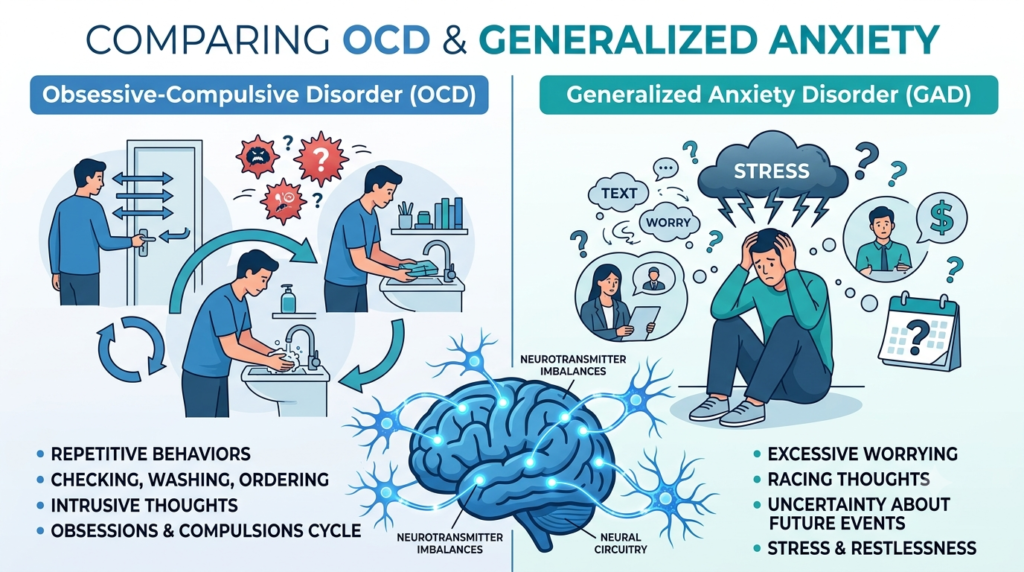
1. Anxiety is a Core Feature of OCD
Anxiety isn’t just a side effect of OCD—it’s central to the condition. The obsessions in OCD trigger intense anxiety, and compulsions are performed specifically to reduce that anxiety.
Example:
- Obsession: “What if I left the stove on and the house burns down?”
- Anxiety: Intense fear, racing heart, panic
- Compulsion: Checking the stove repeatedly
- Result: Temporary anxiety relief, but the cycle continues
2. They Share Similar Brain Mechanisms
Both OCD and anxiety disorders involve:
- Overactive amygdala (the brain’s fear center)
- Heightened threat detection
- Difficulty dismissing worries
- Imbalances in neurotransmitters, particularly serotonin
The Science: Brain imaging studies show that both conditions involve hyperactivity in areas responsible for detecting danger and processing fear. However, OCD also involves specific circuits related to habit formation and error detection.
3. They Often Co-Occur
Research shows that:
- About 76% of people with OCD also have an anxiety disorder at some point in their lives
- Having one condition increases the risk of developing the other
- Many people are diagnosed with both simultaneously
4. They Can Trigger Each Other
- High anxiety levels can worsen OCD symptoms
- OCD compulsions can create more anxiety when they interfere with life
- Stress affects both conditions similarly
Key Differences Between OCD and Anxiety Disorders
While they’re connected, OCD and anxiety disorders have important differences:
Nature of Worries
Generalized Anxiety Disorder (GAD):
- Worries about real-life concerns (health, money, work, relationships)
- Worries feel somewhat realistic and rational
- “What if I lose my job?” “What if my child gets sick?”
OCD:
- Intrusive thoughts often feel bizarre, irrational, or disturbing
- Thoughts are ego-dystonic (go against your values)
- “What if I harm someone I love?” “What if I’m contaminated and will die?”
Response to Worries
Anxiety Disorders:
- May worry excessively or avoid situations
- No specific rituals required
- Might seek reassurance but not in a ritualistic way
OCD:
- Must perform specific compulsions to reduce anxiety
- Rituals are repetitive and follow rules
- Compulsions feel mandatory, not optional
Content of Thoughts
Anxiety:
- Worries are about things that could realistically happen
- Focused on future events or outcomes
OCD:
- Often involves magical thinking (“If I don’t count to 10, something bad will happen”)
- May involve taboo or disturbing content (violent, sexual, or religious themes)
- Thoughts feel intrusive and unwanted
Time Spent
Anxiety:
- Worry can be constant but doesn’t necessarily involve time-consuming rituals
OCD:
- Compulsions often take up hours each day
- Specific, repetitive behaviors must be completed
How OCD and Anxiety Affect Mental Health Together
1. Increased Distress
Having both conditions creates a double burden:
- More intense and frequent anxiety
- Greater interference with daily life
- Higher levels of emotional exhaustion
2. Social Isolation
Both conditions can lead to:
- Avoiding social situations
- Difficulty maintaining relationships
- Feeling misunderstood or alone
- Shame about symptoms
3. Physical Health Impact
Chronic anxiety and OCD can cause:
- Sleep problems and insomnia
- Fatigue and exhaustion
- Headaches and muscle tension
- Digestive issues
- Weakened immune system
- Increased risk of cardiovascular problems
4. Depression Risk
Living with OCD and anxiety increases the risk of depression due to:
- Constant stress and worry
- Feeling hopeless about recovery
- Isolation and loneliness
- Exhaustion from fighting symptoms
5. Impact on Daily Functioning
Together, these conditions can affect:
- Work/School: Difficulty concentrating, meeting deadlines, or attending regularly
- Relationships: Strain on family and friendships
- Self-Care: Neglecting basic needs due to time spent on rituals or worry
- Quality of Life: Missing out on activities and experiences
The Anxiety-OCD Cycle: How They Feed Each Other
The Vicious Cycle:
- Stress or Trigger → Increases general anxiety
- Higher Anxiety → Makes OCD obsessions more frequent and intense
- More Obsessions → Lead to more compulsions
- Time-Consuming Compulsions → Create more stress and life problems
- Life Problems → Increase general anxiety
- Cycle Repeats → Both conditions worsen
Breaking the Cycle:
Understanding this cycle is the first step to breaking it. Treatment must address both the OCD patterns and the underlying anxiety.
Treatment: Addressing Both OCD and Anxiety
The good news? Many treatments effectively address both conditions.

1. Cognitive Behavioral Therapy (CBT)
For OCD – Exposure and Response Prevention (ERP):
- Gradually face feared situations without performing compulsions
- Learn that anxiety decreases naturally without rituals
- Break the OCD cycle
For Anxiety – Traditional CBT:
- Identify and challenge anxious thoughts
- Learn that worries are often exaggerated
- Develop healthier thinking patterns
Combined Approach:
Many therapists use both techniques, tailoring treatment to address OCD compulsions while also managing general anxiety.
2. Medication
SSRIs (Selective Serotonin Reuptake Inhibitors):
- Effective for both OCD and anxiety disorders
- Help regulate serotonin levels in the brain
- Reduce intensity of obsessions and general anxiety
- Common medications: Fluoxetine, Sertraline, Fluvoxamine
Important Notes:
- OCD often requires higher doses than anxiety alone
- It may take 10-12 weeks to see full benefits
- Medication works best when combined with therapy
Other Medications:
- SNRIs (Serotonin-Norepinephrine Reuptake Inhibitors)
- Anti-anxiety medications for short-term relief (used cautiously)
- Always consult a psychiatrist for proper evaluation
3. Mindfulness and Relaxation Techniques
These help manage both conditions:
Mindfulness Meditation:
- Observe thoughts without judgment
- Reduce reactivity to intrusive thoughts
- Lower overall anxiety levels
Deep Breathing Exercises:
- Activate the body’s relaxation response
- Reduce physical anxiety symptoms
- Can be used during exposure exercises
Progressive Muscle Relaxation:
- Release physical tension
- Calm the nervous system
- Improve sleep quality
4. Lifestyle Changes
Regular Exercise:
- Reduces anxiety naturally
- Improves mood and sleep
- Helps manage stress
Sleep Hygiene:
- Maintain consistent sleep schedule
- Create calming bedtime routine
- Avoid screens before bed
Stress Management:
- Identify and reduce stressors when possible
- Set boundaries and prioritize self-care
- Build a support network
Limit Caffeine and Alcohol:
- Both can worsen anxiety
- Alcohol may temporarily reduce anxiety but worsens it long-term
- Caffeine can trigger panic-like symptoms
5. Support Groups
Connecting with others who understand:
- Reduces feelings of isolation
- Provides practical coping strategies
- Offers hope and encouragement
- Available in-person and online
Practical Coping Strategies for Daily Life
When Anxiety Spikes:
1. The 5-4-3-2-1 Grounding Technique:
- Name 5 things you can see
- 4 things you can touch
- 3 things you can hear
- 2 things you can smell
- 1 thing you can taste
This brings you back to the present moment and reduces anxiety.
2. Box Breathing:
- Breathe in for 4 counts
- Hold for 4 counts
- Breathe out for 4 counts
- Hold for 4 counts
- Repeat 4-5 times
3. Challenge the Thought:
- “Is this thought based on facts or feelings?”
- “What would I tell a friend who had this worry?”
- “What’s the worst that could realistically happen?”
When OCD Urges Are Strong:
1. Delay the Compulsion:
- Wait 5 minutes before giving in
- Gradually increase the delay time
- Notice that anxiety often decreases on its own
2. Label It:
- “This is my OCD talking, not reality”
- “This is an intrusive thought, not a fact”
- Creates distance between you and the thought
3. Do Something Else:
- Engage in a different activity
- Call a friend
- Go for a walk
- Redirect your attention
Managing Both Together:
Create a Wellness Plan:
- List your triggers
- Identify early warning signs
- Have coping strategies ready
- Know when to seek additional help
Track Your Progress:
- Keep a journal of symptoms
- Note what helps and what doesn’t
- Celebrate small victories
- Share progress with your therapist
When to Seek Professional Help
Contact a mental health professional if:
- Anxiety or OCD symptoms interfere with daily life
- You spend more than an hour daily on compulsions or worry
- You’re avoiding important activities or places
- You feel depressed or hopeless
- You have thoughts of self-harm
- Your relationships are suffering
- Previous coping strategies no longer work
The Role of Family and Friends
How Loved Ones Can Help:
DO:
✓ Learn about both OCD and anxiety
✓ Be patient and understanding
✓ Encourage professional treatment
✓ Maintain normal routines
✓ Celebrate progress, no matter how small
✓ Take care of your own mental health
DON’T:
✗ Participate in rituals or provide excessive reassurance
✗ Tell them to “just relax” or “stop worrying”
✗ Get frustrated when they can’t control symptoms
✗ Accommodate OCD or anxiety by changing family routines
✗ Take symptoms personally
✗ Enable avoidance behaviors
Supporting Without Enabling:
There’s a fine line between support and accommodation:
- Support: “I know this is hard. Let’s work through it together using your coping strategies.”
- Accommodation: “I’ll check the locks for you so you don’t have to worry.”
Accommodation provides temporary relief but strengthens OCD and anxiety long-term.
Hope for Recovery
While OCD and anxiety can feel overwhelming, especially when they occur together, recovery is absolutely possible. Many people successfully manage both conditions and live fulfilling lives.
What Recovery Looks Like:
- Symptoms don’t control your life
- You can engage in activities you value
- Relationships improve
- You have effective coping strategies
- Anxiety and obsessions are manageable
- You feel hopeful about the future
Important: Recovery doesn’t mean symptoms disappear completely. It means learning to manage them so they don’t interfere with living the life you want.