
Recognizing the warning signs and understanding why early help can make all the difference
Understanding OCD in Young People
Obsessive-Compulsive Disorder (OCD) doesn’t just affect adults—it commonly begins in childhood or adolescence. In fact, about half of all adults with OCD first experienced symptoms before age 18. The good news? When identified early and treated properly, children and teens can learn to manage OCD effectively and prevent it from interfering with their development and happiness.
OCD in young people looks similar to adult OCD but can be harder to spot because children may hide their symptoms, feel ashamed, or not have the words to explain what they’re experiencing.
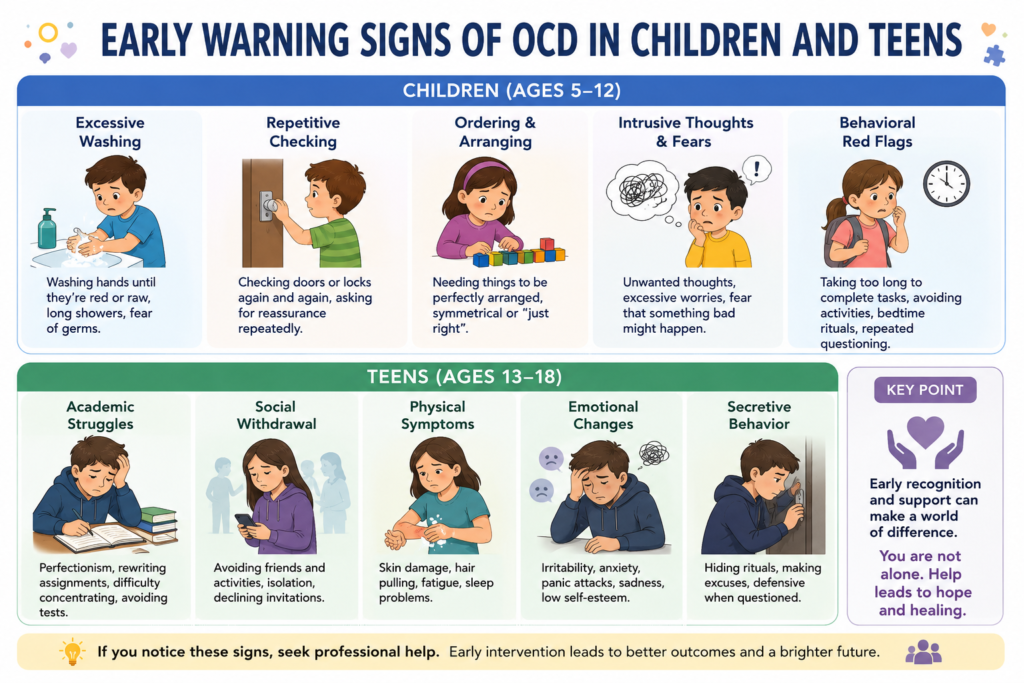
Early Warning Signs in Children (Ages 5-12)
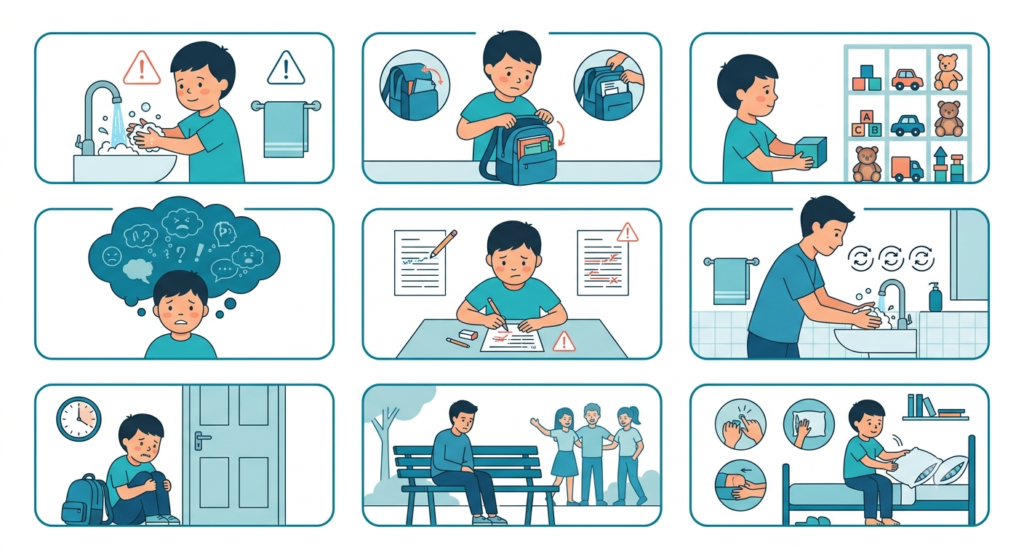
Excessive Washing and Cleaning
- Washing hands until they’re red, raw, or bleeding
- Taking extremely long showers or baths
- Refusing to touch certain objects they consider “contaminated”
- Excessive concern about germs or getting sick
Repetitive Checking Behaviors
- Checking doors, windows, or locks multiple times
- Repeatedly asking if they did something correctly
- Going back to check homework over and over
- Needing constant reassurance from parents
Ordering and Arranging
- Spending excessive time arranging toys, books, or clothes in a specific way
- Getting extremely upset if items are moved or “not right”
- Needing things to be symmetrical or “even”
- Redoing tasks until they feel “just right”
Intrusive Thoughts and Fears
- Excessive worry about harm coming to family members
- Fear that something bad will happen if they don’t do things a certain way
- Unwanted thoughts about religion, right and wrong
- Unusual fears that seem out of proportion
Behavioral Red Flags
- Taking much longer than peers to complete simple tasks
- Avoiding certain activities or places
- Frequent lateness due to rituals
- Difficulty sleeping due to bedtime rituals
- Asking the same questions repeatedly despite getting answers
Early Warning Signs in Teens (Ages 13-18)
Teenagers may experience all the childhood signs plus:
Academic Struggles
- Spending hours on homework due to perfectionism
- Erasing and rewriting assignments repeatedly
- Difficulty concentrating due to intrusive thoughts
- Avoiding tests or assignments due to fear of making mistakes
Social Withdrawal
- Avoiding friends to hide rituals
- Declining invitations due to OCD-related fears
- Difficulty participating in group activities
- Isolation and loneliness
Physical Symptoms
- Skin damage from excessive washing
- Hair loss from pulling (trichotillomania, sometimes related to OCD)
- Fatigue from time-consuming rituals
- Sleep problems
Emotional Changes
- Increased irritability, especially when rituals are interrupted
- Anxiety or panic attacks
- Depression or hopelessness
- Low self-esteem
Secretive Behavior
- Hiding rituals from family and friends
- Making excuses for unusual behaviors
- Becoming defensive when questioned about repetitive actions
How OCD Differs in Young People
1. Less Insight
Younger children may not realize their thoughts and behaviors are unusual. They might think everyone does these things.
2. Family Involvement
Children often involve family members in their rituals, asking parents to participate or provide constant reassurance.
3. Changing Symptoms
OCD symptoms in children can shift over time—contamination fears might change to checking behaviors, for example.
4. School Impact
OCD can significantly affect academic performance, attendance, and peer relationships during critical developmental years.
Why Early Intervention Matters
1. Prevents Symptom Worsening
OCD tends to become more entrenched over time. Early treatment can prevent symptoms from becoming severe and harder to treat.
2. Protects Development
Childhood and adolescence are crucial periods for social, emotional, and academic development. Untreated OCD can interfere with:
- Making friends and developing social skills
- Academic achievement and learning
- Building self-confidence and independence
- Developing healthy coping mechanisms
3. Reduces Family Stress
OCD affects the whole family. Early intervention helps everyone learn healthy ways to respond and support the child.
4. Better Treatment Outcomes
Research shows that children and teens respond very well to treatment, especially when it begins early. The brain is still developing, making it more adaptable to change.
5. Prevents Secondary Problems
Untreated OCD can lead to depression, anxiety disorders, substance abuse, and other mental health issues in later years.
What Parents and Caregivers Should Do

If You Notice Warning Signs:
1. Observe Without Judgment
Keep track of behaviors you’re concerned about—when they happen, how often, and how much they interfere with daily life.
2. Talk Openly
Choose a calm moment to ask gentle questions:
- “I’ve noticed you’ve been washing your hands a lot. Can you tell me about that?”
- “You seem worried about something. Would you like to talk about it?”
3. Validate Their Feelings
Let them know their feelings are real and that you’re there to help, not judge.
4. Avoid Accommodation
While it’s natural to want to help, participating in rituals or providing excessive reassurance actually reinforces OCD. Instead:
- Don’t answer the same question repeatedly
- Don’t help with checking rituals
- Don’t modify family routines to accommodate OCD
5. Seek Professional Help
Consult a child psychologist or psychiatrist who specializes in OCD. Early professional assessment is crucial.
6. Educate Yourself and Your Child
Learn about OCD together. Understanding the condition helps reduce fear and shame.
Effective Treatment Options for Young People
Cognitive Behavioral Therapy (CBT) with ERP
Exposure and Response Prevention is the gold standard treatment for children and teens with OCD. It’s adapted to be age-appropriate and often includes:
- Games and activities to make therapy engaging
- Gradual exposure to fears in a safe environment
- Teaching coping skills and anxiety management
- Family involvement in treatment
Family-Based Treatment
Parents and siblings learn how to:
- Support without accommodating OCD
- Respond helpfully when OCD symptoms appear
- Create a supportive home environment
- Celebrate progress and encourage continued effort
Medication
For moderate to severe OCD, medication (usually SSRIs) may be recommended alongside therapy. A child psychiatrist can evaluate whether medication is appropriate.
School Collaboration
Working with teachers and school counselors to:
- Provide accommodations when needed
- Reduce academic pressure that may worsen symptoms
- Create a supportive school environment
Online/Telehealth Options
Video consultations make it easier for families to access specialized OCD treatment, especially in areas where specialists are limited.
Tips for Teachers and School Staff
- Be aware that a child struggling with OCD isn’t being difficult or seeking attention
- Allow extra time for tasks if needed, but don’t enable rituals
- Provide a safe space where the child can take breaks if anxiety becomes overwhelming
- Communicate with parents about observations and concerns
- Educate classmates (with family permission) to reduce stigma and bullying
- Watch for signs of distress, isolation, or declining performance
Success Stories: Hope for Recovery
Many children and teens with OCD go on to live happy, successful lives with proper treatment. Early intervention gives them tools to:
- Manage symptoms effectively
- Build resilience
- Develop healthy coping strategies
- Pursue their goals and dreams without OCD holding them back
Common Myths About Childhood OCD
Myth: “They’ll grow out of it.”
Truth: OCD rarely goes away on its own. Without treatment, it typically persists or worsens.
Myth: “It’s just a phase or attention-seeking behavior.”
Truth: OCD is a real neurobiological condition, not a choice or behavioral problem.
Myth: “Talking about it will make it worse.”
Truth: Open, supportive communication helps children feel understood and more willing to seek help.
Myth: “Only adults get OCD.”
Truth: OCD commonly begins in childhood, with many cases starting between ages 7-12.
Myth: “Medication is the only solution.”
Truth: Therapy (especially ERP) is the first-line treatment. Medication may be added for moderate to severe cases.