
A practical guide to managing OCD successfully with proven treatment approaches
Introduction
If you’ve been diagnosed with OCD, you’re probably wondering: “Can this be treated?” The answer is yes. OCD is one of the most treatable mental health conditions. Most people benefit from a combination of therapy, sometimes medication, and lifestyle changes that support overall mental health.
Let’s explore each treatment option so you can make informed decisions about your care.
Part 1: Therapy for OCD
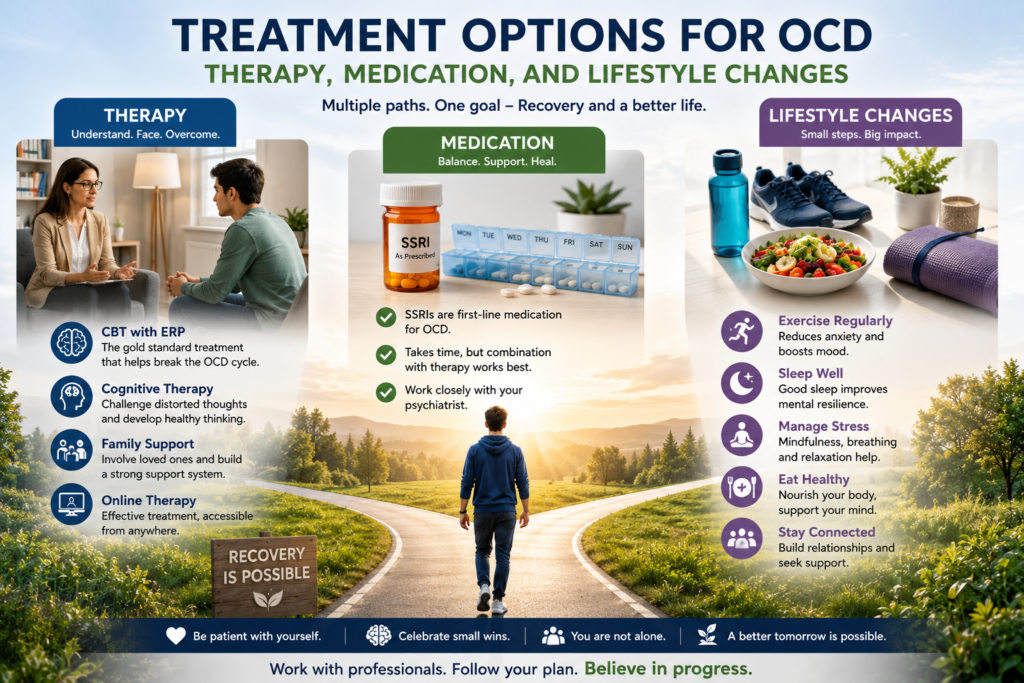
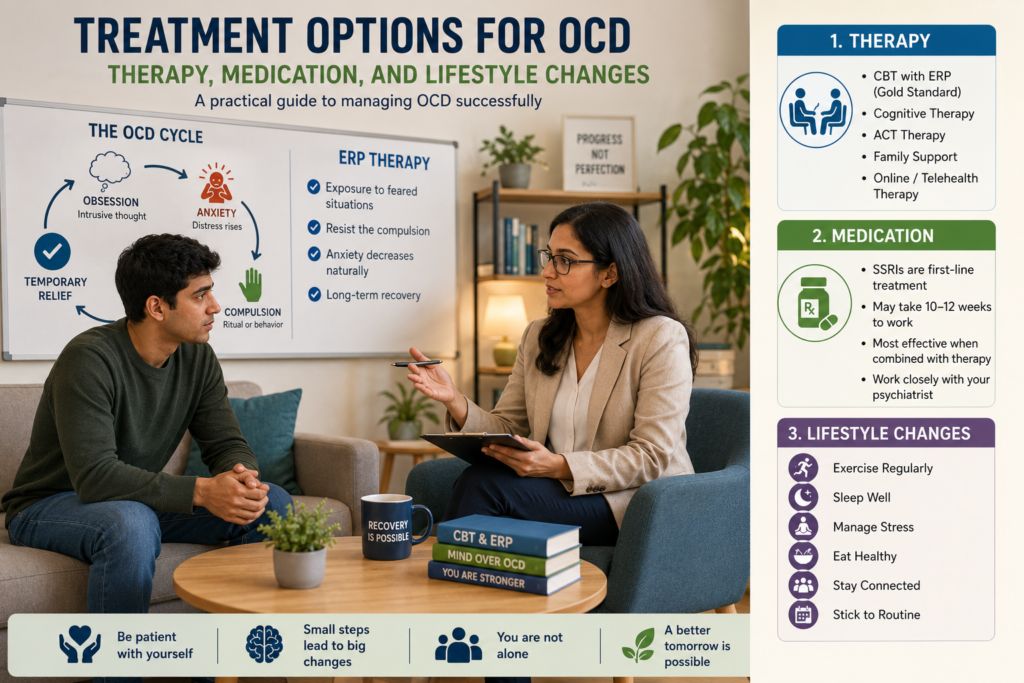
Cognitive Behavioral Therapy (CBT) with Exposure and Response Prevention (ERP)
What It Is:
ERP is the gold standard treatment for OCD. It teaches your brain that feared outcomes won’t happen.
How It Works:
1. Exposure: You gradually face situations that trigger your obsessions, starting with easier scenarios and working up to harder ones.
Example: If you have contamination fears, you might start by touching a doorknob, then progress to not washing your hands immediately.
2. Response Prevention: You resist performing the compulsion. This teaches your brain that anxiety decreases naturally without rituals.
3. Habituation: Over time, your anxiety response to triggers decreases.
What to Expect:
- 12-20 weekly sessions typically
- Homework practice between sessions
- Anxiety may increase initially before improving
- 60-80% of people who complete ERP see significant improvement
Cognitive Therapy (CT)
Focuses on challenging the distorted thoughts that fuel OCD.
Common OCD Thought Patterns:
- Overestimating danger: “If I touch that, I’ll get sick”
- Inflated responsibility: “If something bad happens, it’s my fault”
- Need for certainty: “I must be 100% sure”
The Process:
Your therapist helps you identify these thoughts, examine the evidence, and develop more balanced perspectives.
Other Therapy Options:
Acceptance and Commitment Therapy (ACT):
Teaches you to accept intrusive thoughts without trying to control them while taking action toward your values.
Family-Based Therapy:
Involves family members in treatment, teaching them how to support recovery without enabling OCD.
Online/Telehealth Therapy:
Video consultations make treatment accessible regardless of location. Research shows online ERP is as effective as in-person treatment.
Part 2: Medication for OCD
Medication can be important for moderate to severe OCD, especially when combined with therapy.
SSRIs (Selective Serotonin Reuptake Inhibitors)
Common SSRIs for OCD:
- Fluoxetine (Prozac)
- Sertraline (Zoloft)
- Fluvoxamine (Luvox)
- Paroxetine (Paxil)
- Escitalopram (Lexapro)
Important Facts:
- OCD requires higher doses than depression
- Takes 10-12 weeks for full benefits
- Helps 40-60% of people with OCD
- Works best when combined with therapy
Common Side Effects:
- Nausea (usually temporary)
- Headache
- Sleep changes
- Sexual side effects
Most side effects improve within 2-4 weeks.
Clomipramine (Anafranil)
A tricyclic antidepressant that’s highly effective for OCD but has more side effects than SSRIs. Used when SSRIs haven’t worked or for severe OCD.
Augmentation Strategies
When SSRIs alone aren’t enough, doctors may add:
- Low-dose antipsychotics (Risperidone, Aripiprazole)
- Other medications to boost effectiveness
Important Medication Tips:
- Be patient—finding the right medication takes time
- Don’t stop suddenly—always taper under medical supervision
- Give each medication 10-12 weeks at adequate dose
- Combine with therapy for best results
Part 3: Lifestyle Changes and Self-Care
Lifestyle changes support therapy and medication but aren’t sufficient as sole treatment.
1. Regular Exercise
Why It Helps:
- Reduces anxiety naturally
- Increases serotonin and endorphins
- Improves sleep and mood
What Works:
- 30 minutes of aerobic exercise, 5 times per week
- Yoga, walking, swimming, cycling
- Even 10-minute walks help
2. Sleep Hygiene
Poor sleep worsens OCD symptoms.
Sleep Strategies:
- Go to bed and wake at the same time daily
- Avoid screens 1 hour before bed
- Keep bedroom cool, dark, and quiet
- Avoid caffeine after 2 PM
- Set time limits for bedtime rituals
3. Stress Management
Effective Techniques:
- Mindfulness meditation: Start with 5 minutes daily
- Deep breathing: 4-7-8 technique or box breathing
- Progressive muscle relaxation: Tense and release muscle groups
- Time management: Prioritize tasks, schedule breaks
4. Nutrition
Foods That May Help:
- Omega-3 fatty acids (fish, walnuts)
- Complex carbohydrates (whole grains, vegetables)
- Protein (lean meats, beans, eggs)
- Magnesium-rich foods (leafy greens, nuts)
Foods to Limit:
- Caffeine (increases anxiety)
- Sugar (causes blood sugar spikes)
- Alcohol (worsens anxiety long-term)
- Processed foods
5. Social Connection
Isolation worsens OCD.
Ways to Connect:
- Maintain relationships with friends and family
- Join OCD support groups (online or in-person)
- Volunteer
- Be open about struggles with trusted people
6. Limit Reassurance-Seeking
Constantly asking “Is this okay?” reinforces OCD.
Strategies:
- Set daily limits on reassurance requests
- Wait 10 minutes before asking
- Remind yourself: “This is OCD. I don’t need reassurance.”
7. Structure and Routine
Predictable routines reduce uncertainty.
Create Structure:
- Consistent wake and sleep times
- Plan meals and activities
- Set time limits for tasks
- Include enjoyable activities and hobbies
8. Engage in Meaningful Activities
Don’t let OCD consume your life.
Take Action:
- Pursue hobbies and interests
- Set goals unrelated to OCD
- Do things that bring joy
- Don’t wait until OCD is “gone”—start now
Creating Your Personalized Treatment Plan
Step 1: Get a Proper Diagnosis
See a mental health professional who specializes in OCD.
Step 2: Start with Therapy
ERP is the gold standard. Begin with a qualified therapist.
Step 3: Consider Medication
Discuss with a psychiatrist if symptoms are moderate to severe or therapy alone isn’t enough.
Step 4: Implement Lifestyle Changes
Start with 1-2 changes (e.g., exercise and sleep) and gradually add more.
Step 5: Build Your Support System
Educate family, join support groups, connect with others in recovery.
Step 6: Be Patient
Recovery takes time. Stick with treatment even when progress feels slow.
What to Expect During Treatment
Weeks 1-4:
- Learning about OCD and treatment
- Starting exposures or adjusting to medication
- May feel worse before feeling better
Weeks 4-12:
- Progressing through exposures
- Medication reaching therapeutic levels
- Beginning to see improvements
Months 3-6:
- Significant symptom reduction
- More confidence managing OCD
- Expanding activities and relationships
6+ Months:
- Maintaining gains
- Living more freely
- Possibly reducing treatment frequency
Dealing with Setbacks
Setbacks are normal and don’t mean treatment has failed.
How to Respond:
- Don’t panic—setbacks don’t erase progress
- Return to basics: review coping strategies, practice exposures
- Identify triggers and learn from them
- Be compassionate with yourself
When Treatment Isn’t Working
If you’ve tried treatment for several months without improvement:
What to Do:
- Get a second opinion
- Try a different therapist or medication
- Consider intensive treatment programs
- Address co-occurring conditions
- Increase treatment frequency
Advanced Options for Severe Cases:
- Intensive Outpatient Programs (IOP)
- Residential treatment
- Deep Brain Stimulation (DBS)
- Transcranial Magnetic Stimulation (TMS)